
Waking Up Between 3 and 5 AM? What Your Body Is Trying to Tell You
Published on December 18, 2025

Waking between 3–5 AM isn’t random
If you wake up alert between 3 and 5 AM while the rest of the world sleeps, it can feel unsettling and lonely. But this pattern is common — and usually a meaningful signal from your body, not a failure on your part.
Your body may be trying to protect you
Early-morning awakenings are often linked to cortisol shifts, blood sugar regulation, or nervous system check-ins. These mechanisms evolved to keep you safe — but modern stress can trigger them too early.
You may recognize these signs
Waking at the same hour each night, sudden alertness, jaw or chest tension, shallow breathing, or the feeling that sleep won’t return even though you’re exhausted.
This is a nervous system moment
Between 3–5 AM, your nervous system briefly reassesses safety before allowing deeper rest. If it senses stress or imbalance, it may choose wakefulness as a protective response.
What usually helps sleep return
Gentle reassurance, slow breathing, jaw release, steady body pressure, and avoiding mental problem-solving often allow the body to relax and drift back into sleep naturally.
What to do when you wake at night
If early-morning wake-ups keep repeating and you want a calm, structured response instead of guessing in the dark, a simple protocol can help your body feel safe enough to sleep again.
Waking Up Between 3 and 5 AM? What Your Body Is Trying to Tell You
If you keep waking up between 3 and 5 AM, it can feel unsettling — like your body has its own agenda in the middle of the night.
The quiet. The alertness. The sense that sleep has suddenly left the room.
Here’s the important thing to know right away:
this pattern is common, meaningful, and usually fixable.
Your body isn’t sabotaging you.
It’s communicating.
The 3–5 AM Window: What’s Actually Happening
Between 3 and 5 AM, your body begins a natural transition phase.
From a biological perspective:
- Cortisol (your alertness hormone) starts to rise
- Blood sugar regulation shifts
- REM sleep begins to thin out
- Your nervous system checks for safety before allowing deeper rest
What this means for you:
If your system senses any imbalance — physical, emotional, or neurological — this is the moment it’s most likely to wake you.
You’re not waking up because something is wrong.
You’re waking up because your body is asking a question.
Reason #1: A Cortisol Rebound from the Evening
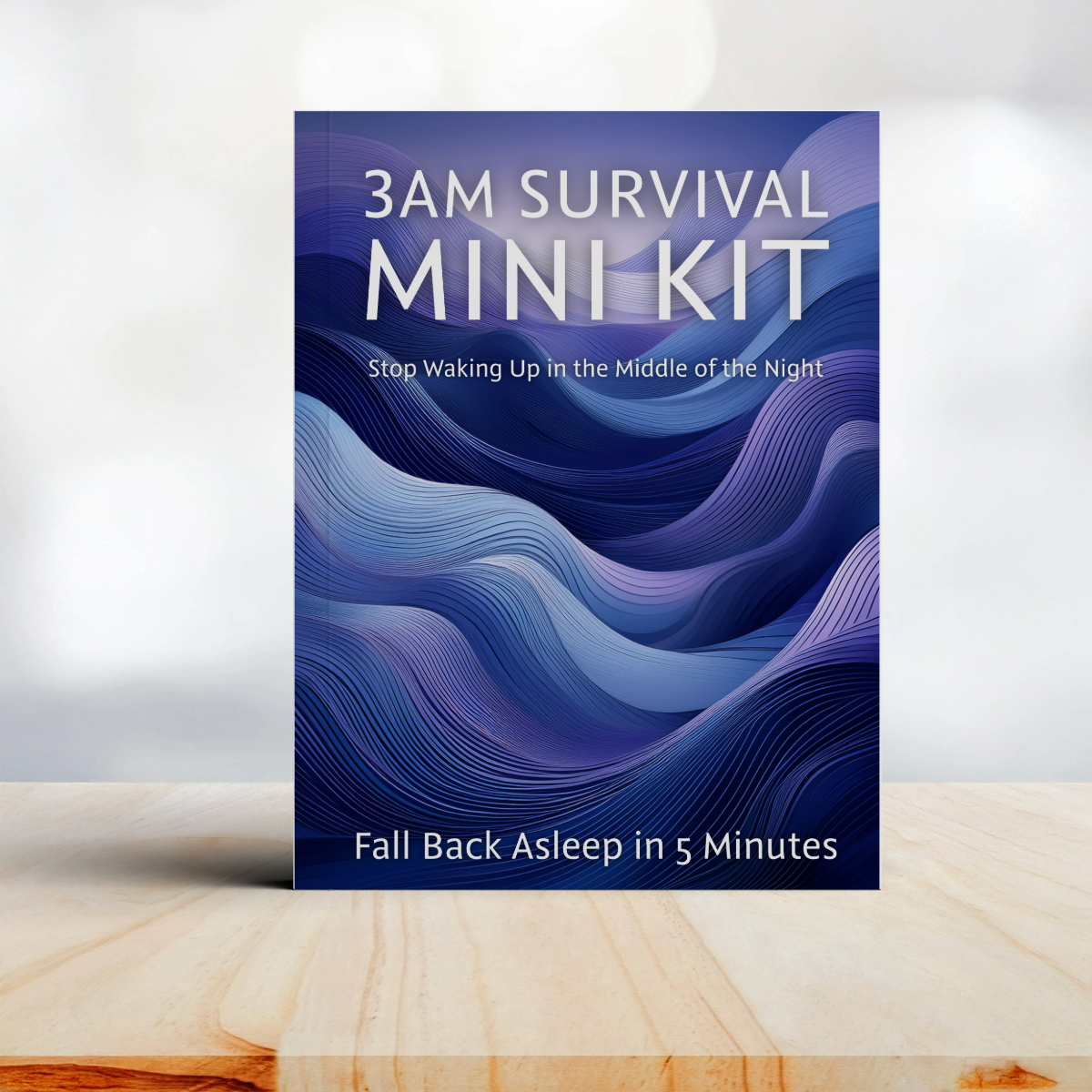
3AM Survival Mini Kit
Fall Back Asleep in 5 Minutes
A clear, no-nonsense guide that tells you exactly why you wake up at 3AM and what to do the moment it happens — so you can stop the adrenaline spike, calm your body, and fall back asleep within minutes. Every step is practical and designed to fix the problem right when it starts.
See What’s Inside – $4Cortisol is meant to be lowest at night and rise gently toward morning.
But stress, late meals, screens, or emotional overload can flatten this rhythm.
When cortisol rises too sharply between 3–5 AM, your body interprets it as a signal to wake.
How this feels for you:
- Sudden alertness
- A “tired but wired” sensation
- Difficulty drifting back to sleep even though your body feels exhausted
If this sounds familiar, you may recognize the pattern from evening restlessness as well.
👉 Related reading:
How Evening Cortisol Affects Your Sleep and 9 Ways to Calm It Naturally
Reason #2: A Drop in Blood Sugar
During the night, your liver releases glucose to keep your brain fueled.
If that release is unstable, your body compensates by increasing cortisol and adrenaline.
What this means for you:
Your body may wake you not because you’re anxious — but because it’s trying to protect your brain.
This often shows up as:
- A jolt of wakefulness
- Lightheadedness or warmth
- A subtle sense of urgency without clear thoughts
Your body isn’t panicking.
It’s stabilizing.
Reason #3: Jaw Tension and Nighttime Clenching
Many people clench their jaw or grind their teeth most intensely during REM transitions — especially in the early morning hours.
This muscular tension sends a signal to the brain that something needs attention.
How this affects you:
- You wake with tightness in the jaw, neck, or temples
- Your sleep feels “shallow” even if you were asleep for hours
- You may feel alert but physically tense
👉 You may want to explore this further here:
How to Stop Grinding Your Teeth at Night
Reason #4: Your Nervous System Is Checking for Safety
During deep night sleep, your nervous system loosens its guard.
As morning approaches, it briefly reassesses: Is it safe to stay asleep?
If stress, emotional processing, or overstimulation is present, the system may choose wakefulness instead.
What this means for you:
This awakening isn’t mental overthinking — it’s protective awareness.
Your body is asking:
“Can I rest a little longer?”
Reason #5: Emotional Processing During REM Transitions
Early morning REM sleep is closely tied to emotional integration.
If something unresolved is present — even something subtle — the transition out of REM can feel abrupt.
How this shows up for you:
- You wake with a feeling rather than a thought
- There may be a sense of heaviness, sadness, or alertness without narrative
- Your mind may search for a reason, even if none is obvious
This doesn’t mean something is wrong.
It means your system is working through something quietly.
What Your Body Is Actually Asking For
Across all these causes, the message is surprisingly consistent.
Your body isn’t asking for:
- More analysis
- More effort
- More fixing
It’s asking for:
- Safety
- Gentle reassurance
- A soft return to rest
The goal at 3–5 AM isn’t to force sleep —
it’s to signal that rest is still allowed.
A 5-Minute Protocol If You Wake Between 3–5 AM
Try this the next time you wake:
-
Do nothing for 30 seconds
Let your body realize there’s no emergency. -
Slow your exhale
Inhale normally.
Exhale slightly longer than your inhale — 6 to 8 seconds. -
Soften the jaw
Let your tongue rest at the bottom of your mouth.
Gently drop the teeth apart. -
Apply steady pressure
Place one hand on your chest or upper abdomen.
Pressure signals safety to the nervous system. -
Avoid mental problem-solving
This is not the time for insight.
It’s the time for regulation.
Often, sleep returns quietly once the body feels supported.
If This Keeps Happening
Frequent 3–5 AM awakenings are a sign that your body wants structure, not struggle.
If you’d like a guided, step-by-step approach using pressure points and nervous system regulation, you may find this helpful:
👉 Acupressure for Sleep – Gentle Night Support
A Final Reassurance
Waking up between 3 and 5 AM doesn’t mean you’re broken.
It means your body is paying attention.
And with the right support, it usually learns to rest again.

Martin Lain — Sleep Researcher & Creator of SleepCureAI
Martin Lain combines modern sleep science, circadian-rhythm research, TCM-inspired insights, and AI-based pattern analysis to help people understand their sleep more deeply. His work integrates gentle nighttime rituals, nervous system regulation, and data-driven tools.
Medically Reviewed by
Dr. Mei Lin, DACM – TCM Sleep Medicine Specialist
(Editorial Medical Reviewer Persona)
Dr. Mei Lin is an editorial medical reviewer specializing in Traditional Chinese Medicine. Her expertise focuses on the relationship between Yin–Yang balance, Shen (Heart spirit), Liver Qi regulation, and the Kidney's role in nighttime restoration. Her review ensures that SleepCureAI articles align with foundational TCM sleep principles and classical physiological patterns described in traditional sources.
- Yin deficiency and difficulty sleeping
- Liver Qi stagnation and 1–3AM wake-ups
- Kidney Yin and nighttime restoration
This reviewer profile represents an editorial medical persona used for accuracy review of TCM-related sleep concepts.
Reviewed by SleepCureAI Sleep Engine (Beta)
A machine-learning model trained on circadian rhythm science, Traditional Chinese Medicine sleep physiology, and behavioral sleep optimization frameworks. This system reviews each article for timing accuracy, emotional–physiological coherence, and alignment with safe sleep practices.
- Circadian rhythm consistency
- Nervous system safety & regulation insights
- TCM coherence (Yin–Yang, Liver Qi, Shen)
- Evidence-based lifestyle recommendations
Disclaimer: This AI system does not diagnose medical conditions and does not replace professional care.