
How Evening Cortisol Disrupts Your Sleep (And 9 Proven Ways to Calm It Naturally)
Published on November 27, 2025

Why evening cortisol matters
If you feel exhausted but alert at night, or wake between 1–4 AM with a racing mind, your cortisol rhythm may be out of sync. This isn’t random — it’s a common stress-response pattern.
What’s happening in your body
Elevated evening cortisol suppresses melatonin, activates the emotional brain, destabilizes blood sugar, and prevents deep, restorative sleep — even when you’re physically tired.
You might recognize these signs
Feeling wired but tired, a sudden second wind at night, racing thoughts at bedtime, heart pounding when lying down, or repeated 1–3 AM wake-ups.
The TCM perspective
From traditional Chinese medicine, high evening cortisol mirrors internal heat, Liver Qi stagnation, and Shen agitation — patterns long associated with nighttime restlessness and fragmented sleep.
What actually helps
Calming cortisol comes from predictable evening routines, stable blood sugar, gentle nervous system regulation, acupressure, aromatherapy, breathwork, and reducing light and stimulation at night.
Want a calmer evening routine?
Download the free Acupressure for Better Sleep guide — a simple, bedside-friendly resource to calm the nervous system and support deeper sleep naturally.
How Evening Cortisol Affects Your Sleep — And 9 Ways to Calm It Naturally
Evening cortisol is one of the most overlooked causes of sleep disruption.
Many people try magnesium, blue-light glasses, or relaxing teas, yet still feel tired but wired at night — unable to fall asleep or waking between 1–4 AM with a racing mind.
Feeling tired but wired at night?
If your body feels exhausted but your mind won’t switch off —
or you keep waking between 1–4 AM — evening cortisol may be the missing piece.
Answer a few gentle questions to understand why your body feels alert at night — and what may help tonight.
This article will help you:
- understand why cortisol stays high at night
- recognize the signs of “late cortisol rhythm”
- calm your nervous system naturally
- fall asleep faster — and stay asleep longer
👉 If you want the shortest possible path to relief, start here:
🌙 Evening Cortisol Reset – Mini Edition
An 8–10 minute calming routine designed for tired, overstimulated evenings.
This gentle reset helps your body:
- release the “second wind” at night
- lower stress hormones naturally
- soften into sleep without force or supplements
✔ light cues
✔ breath & nervous system regulation
✔ mind-closure ritual
✔ optional support for 2–4 AM wake-ups
Evening Cortisol Reset – Mini Edition (optional mini guide)
What Is Evening Cortisol?
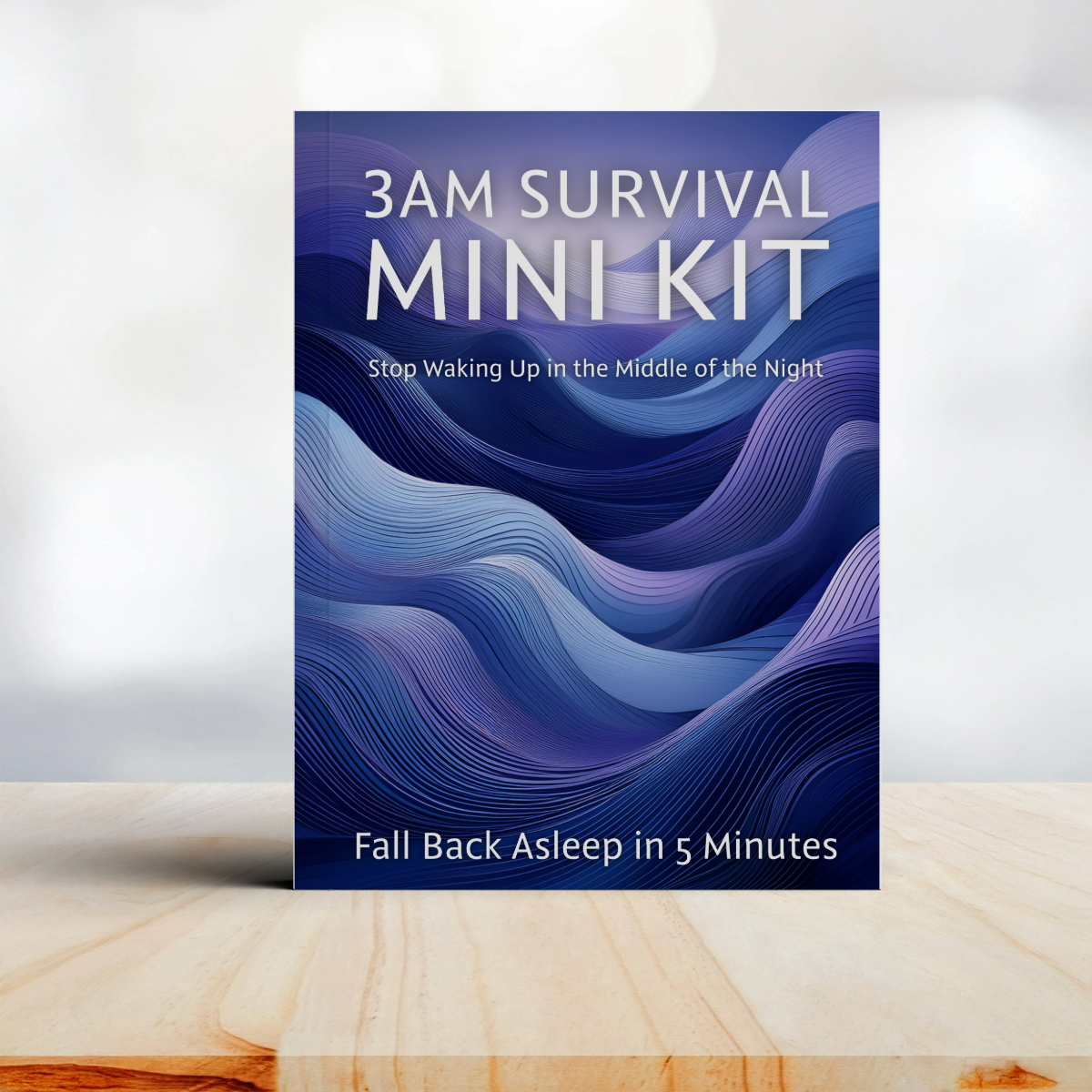
3AM Survival Mini Kit
Fall Back Asleep in 5 Minutes
A clear, no-nonsense guide that tells you exactly why you wake up at 3AM and what to do the moment it happens — so you can stop the adrenaline spike, calm your body, and fall back asleep within minutes. Every step is practical and designed to fix the problem right when it starts.
See What’s Inside – $4Cortisol is your body’s primary stress hormone.
It follows a predictable daily rhythm:
- High in the morning → prepares you for wakefulness
- Stable during daytime → supports focus and energy
- Low in the evening → allows melatonin to rise
- Lowest at night → enables deep, restorative sleep
But this curve is very sensitive. Stress, irregular meals, blue light, emotional load, and inflammation can cause cortisol to remain elevated in the evening, keeping your nervous system too stimulated to fall asleep.
Symptoms of high evening cortisol
- Trouble falling asleep
- Feeling “wired but tired”
- A sudden “second wind” around 21:00–23:00
- Racing thoughts at bedtime
- Heart pounding when lying down
- Waking between 1–3 AM
- Difficulty staying asleep
- Light, non-restorative sleep
These signs directly mirror TCM patterns like Shen agitation, Liver Qi stagnation, Yin deficiency, and internal heat, all commonly associated with insomnia.
Why High Evening Cortisol Disrupts Sleep
1) It suppresses melatonin
Cortisol and melatonin work in opposition. If cortisol stays high, melatonin cannot rise — even if you’re exhausted.
2) It activates the amygdala
This keeps your emotional brain alert, making it hard to switch off thinking.
3) It destabilizes blood sugar
Low nighttime glucose causes an adrenaline-cortisol spike, which is one of the key pathways behind 3AM wake-ups referenced in the 3AM Survival Kit.
4) It creates internal heat (TCM perspective)
Excess Yang or Liver heat results in:
- restlessness
- irritability
- warm body at night
- wake-ups around 1–3 AM
5) It prevents the shift into deep sleep
You might fall asleep, but you don’t stay asleep — leading to fragmented, shallow rest.
TCM Perspective: Why Evening Cortisol Feels Like “Internal Heat”
Based on classical TCM principles, sleep quality depends on the harmony of Yin/Yang and the smooth flow of Qi.
Evening restlessness is often linked to:
| TCM Pattern | Signs | Effect on Sleep |
|---|---|---|
| Liver Qi stagnation | irritability, chest tightness | trouble falling asleep |
| Liver heat / Yang rising | night heat, vivid dreams, 1–3 AM waking | sudden awakenings |
| Heart Shen disturbance | overthinking, anxiety | light sleep, emotional dreams |
| Yin deficiency | warm palms/soles, dry mouth | difficulty calming down |
TCM texts emphasize nourishing Yin, cooling excess Yang, and calming the Heart-Shen — all of which overlap with lowering evening cortisol.
Aromatherapy for Lowering Evening Cortisol
Aromatherapy influences the limbic system — the emotional brain — within seconds.
Research supports essential oils such as:
- Lavender — lowers heart rate and supports parasympathetic activity
- Bergamot — reduces nervous tension
- Roman chamomile — mild sedative effect
- Sandalwood — grounding and excellent for calming racing thoughts
TCM mirrors these qualities:
Lavender lightly cools heat; sandalwood calms the Heart and Shen.
Simple aroma breathing ritual:
- Bring the oil near your nose.
- Inhale 4 seconds.
- Hold 2 seconds.
- Exhale 6 seconds.
Repeat 10 times.
Comparison Table: Physical vs Emotional Causes of Evening Cortisol
| Trigger | Cortisol Effect | TCM Interpretation | Helpful Approaches |
|---|---|---|---|
| Late screens | melatonin suppression | Heart fire agitation | digital sunset, warm lighting |
| Heavy dinner | glucose spikes | damp heat, stagnation | light warm meals before 19:00 |
| Emotional stress | cortisol surge | Liver Qi stagnation | breathwork, LR3 acupressure |
| Alcohol | 2–4 AM rebound | internal heat | limit PM alcohol |
| Overthinking | hyperarousal | Shen disturbance | journaling, HT7 acupressure |
9 Ways to Lower Evening Cortisol Naturally
Each method blends Western science with TCM wisdom and practical steps.
1) Build a Cortisol-Friendly Evening Routine
Your nervous system needs predictability.
Try:
- dimming the lights after 20:30
- warm shower or bath
- gentle stretching
- relaxing herbal tea (passionflower, lemon balm, magnolia bark)
- the Sleep Tips & Gentle Strategies page for guidance (/sleep-tips)
This is the most foundational step — without routine, nothing else works as well.
2) Balance Blood Sugar Before Bed
Blood sugar instability is one of the strongest triggers for nighttime cortisol spikes.
Smart evening snacks:
- greek yogurt + nuts
- oatcake + almond butter
- chia pudding
- a small portion of turkey (tryptophan source)
Avoid:
- evening desserts
- large meals after 19:00
- alcohol before bed
Stable glucose = stable cortisol.
3) Use Acupressure to Calm Liver Qi + Shen
From the Acupressure e-book:
- PC6 (Neiguan) — calms anxiety and heart agitation
- LR3 (Tai Chong) — releases Liver Qi stagnation
- HT7 (Shenmen) — anchors the Shen and quiets the mind
This is an excellent place to link your free Acupressure for Better Sleep e-book:
https://www.sleepcureai.com/acupressure-ebook
Use for 2–3 minutes per point before bed.
4) Add Evening Aromatherapy
Scents regulate limbic activity faster than cognitive techniques.
Blends that lower cortisol:
- lavender + bergamot
- chamomile + sandalwood
- clary sage + cedarwood
Diffuse 30 minutes before bed or add 2–3 drops to a warm bath.
5) Practice the “20-Minute Decompression Gap”
Before your bedtime routine even begins, create a buffer free of:
- work
- screens
- stimulating conversations
- problem-solving
This prevents the cortisol-raising "second wind" often seen around 21:00-22:00.
6) Strengthen Yin With Heat Therapy
TCM advises evening warming rituals for grounding the body:
- warm foot bath with magnesium salt
- warm compress on lower abdomen
- gentle Qi Gong or slow yoga
- light acupressure on LR3 + HT7
These help pull drifting Yang energy downward, reducing mental agitation.
7) Remove Light Signals That Raise Cortisol
Even tiny amounts of light suppress melatonin and increase alertness.
Checklist:
- unplug LED chargers
- cover bright indicators
- use amber bulbs after 21:00
- consider blackout curtains or a sleep mask
- turn off overhead lighting after sunset
8) Use Vagus-Nerve Breathwork
Two proven techniques:
4-7-8 Breathing
Inhale 4 → Hold 7 → Exhale 8
Reduces heart rate and sympathetic activation.
Extended Exhale Technique
Make your exhale twice as long as your inhale.
Activates the vagus nerve and lowers cortisol.
Both appear in the 3AM Survival Kit as top tools for calming the nervous system.
9) If You Wake at 1–4 AM, Use “Sleep Re-Entry”
Don’t check the clock.
Don’t pick up your phone.
Instead:
- keep lights dim
- use extended exhale breathing
- place a hand on your chest
- visualize sinking deeper into the mattress
- repeat a grounding mantra like “I am safe, I release, I rest”
For structured nighttime guidance, link to the 3AM Survival Kit:
https://www.sleepcureai.com/3am-survival-kit
When Should You Consider Cortisol Testing?
Testing may be helpful if you experience:
- consistent 1–3 AM wake-ups
- a clear “wired but tired” pattern
- PM anxiety
- burnout symptoms
- perimenopause-related sleep issues
Even then, most people see major improvements from lifestyle, acupressure, and TCM-inspired routines.
Conclusion: Calming Cortisol Is a Learnable Skill
Your difficulty falling asleep is not a personal flaw — it’s your body’s physiology signaling that it’s overwhelmed.
The combination of:
- stable glucose
- TCM balancing techniques
- aromatherapy
- acupressure
- evening routine consistency
- and breathwork
is powerful, gentle, and highly effective.
Start with one or two steps tonight.
Download the free Acupressure for Better Sleep e-book, and explore the 3AM Survival Kit if nighttime wake-ups are your main struggle.
Your body is capable of deep rest — it simply needs the right conditions to return to it.
Frequently Asked Questions

Martin Lain — Sleep Researcher & Creator of SleepCureAI
Martin Lain combines modern sleep science, circadian-rhythm research, TCM-inspired insights, and AI-based pattern analysis to help people understand their sleep more deeply. His work integrates gentle nighttime rituals, nervous system regulation, and data-driven tools.
Medically Reviewed by
Dr. Mei Lin, DACM – TCM Sleep Medicine Specialist
(Editorial Medical Reviewer Persona)
Dr. Mei Lin is an editorial medical reviewer specializing in Traditional Chinese Medicine. Her expertise focuses on the relationship between Yin–Yang balance, Shen (Heart spirit), Liver Qi regulation, and the Kidney's role in nighttime restoration. Her review ensures that SleepCureAI articles align with foundational TCM sleep principles and classical physiological patterns described in traditional sources.
- Yin deficiency and difficulty sleeping
- Liver Qi stagnation and 1–3AM wake-ups
- Kidney Yin and nighttime restoration
This reviewer profile represents an editorial medical persona used for accuracy review of TCM-related sleep concepts.
Reviewed by SleepCureAI Sleep Engine (Beta)
A machine-learning model trained on circadian rhythm science, Traditional Chinese Medicine sleep physiology, and behavioral sleep optimization frameworks. This system reviews each article for timing accuracy, emotional–physiological coherence, and alignment with safe sleep practices.
- Circadian rhythm consistency
- Nervous system safety & regulation insights
- TCM coherence (Yin–Yang, Liver Qi, Shen)
- Evidence-based lifestyle recommendations
Disclaimer: This AI system does not diagnose medical conditions and does not replace professional care.